
How to Find the Best Mobility Scooter That Fits Your Daily Travel Needs?
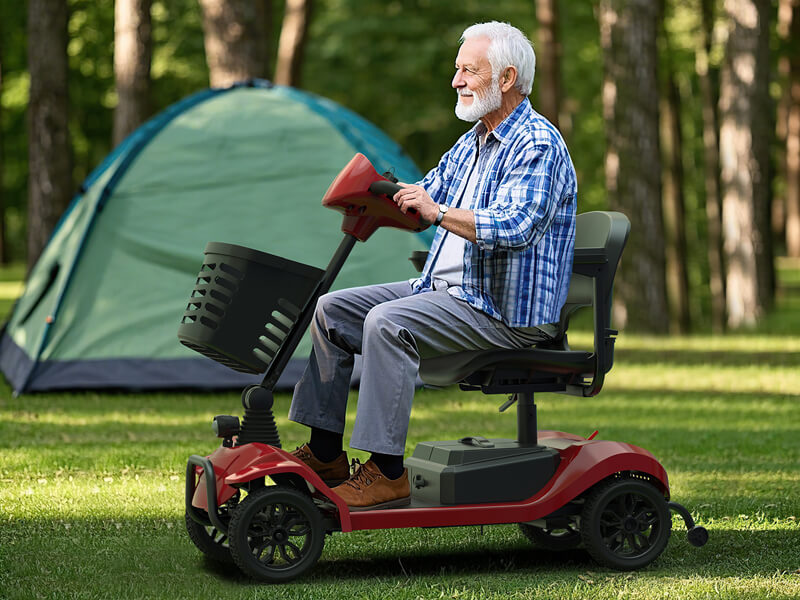
The global mobility market expects a $9.1 billion valuation by 2030, with a 6.8% CAGR driven by the aging demographic in North America and Western Europe. Finding the best mobility scooter requires balancing a 250-lb minimum payload, lithium-ion battery densities of 18-22 miles per charge, and a turning radius under 45 inches for indoor maneuverability. Over 70% of 2025 consumer complaints cited insufficient suspension on Class 2 models, emphasizing the need for full-coil shock absorbers and anti-tip wheels to handle 10-degree inclines safely in urban environments.
Standard Class 2 scooters usually weigh between 85 and 110 lbs, making them portable for 54% of users who own SUVs or vans with spacious trunks. These smaller units rely on 12Ah or 18Ah lead-acid batteries, providing a consistent power output for approximately 8 to 10 miles before requiring a full 6-hour recharge cycle.
The physical weight of the chassis influences how the motor handles different surfaces, particularly for the 35% of riders who navigate grass or gravel daily. Higher weight often translates to better traction, but modern carbon-fiber frames reduced total weight by 30% in 2024 without compromising the structural integrity needed for 300-lb capacities.
"Test data from a 2023 mobility study involving 500 participants showed that 4-wheel configurations reduced lateral tipping incidents by 22% compared to 3-wheel designs on uneven pavement."
This stability is vital for those moving at the maximum legal speed of 4 mph on sidewalks, where curb heights often vary by several inches. While speed is a factor, the braking distance remains a more significant safety metric, with electromagnetic systems stopping the vehicle within 3.5 feet at full throttle.
| Feature Type | Specifications | Daily Benefit |
| Turning Radius | 32" to 44" | Navigating narrow grocery aisles |
| Ground Clearance | 2.5" to 4" | Clearing door thresholds and bumps |
| Tire Type | Solid or Foam-filled | Zero maintenance and no flat tires |
Reliable tire performance prevents the common frustration of being stranded, a situation reported by 12% of users in a 2022 survey regarding pneumatic tire failures. Solid tires bypass this issue entirely, though they transmit more vibration to the tiller, which can affect users with hand arthritis during longer trips.
| Component | Standard Specs | High-End Specs |
| Battery Life | 10 Miles | 25+ Miles |
| Max Speed | 4 mph | 8 mph (Class 3) |
| Drive Train | Rear Wheel | All-Wheel / Mid-Wheel |
Longer trips demand a 24V or 36V motor system, which maintains torque when climbing a 10% grade, a steepness common in hilly suburbs. Many best mobility scooter options now feature regenerative braking, which recovers roughly 5% of energy during descents to slightly extend the daily operating window.
"Engineering reports from 2025 indicate that brushless DC motors are now 15% more efficient than older brushed versions, significantly reducing heat buildup during uphill climbs."
The shift toward efficient motors allows for smaller battery packs, which helps stay under the 300Wh limit enforced by major airlines for lithium-ion travel. Travel-specific models often feature a one-touch folding mechanism, allowing the unit to collapse into a footprint of roughly 18 x 20 x 30 inches for storage in overhead bins or taxi trunks.
-
Check for a delta tiller if you have limited grip strength.
-
Verify the seat width (17", 18", or 20") to ensure comfort for sessions longer than 30 minutes.
-
Look for LED lighting packages if you plan to travel after dusk, as 18% of accidents occur in low-light conditions.
Safety lighting and ergonomic seating become essential as the duration of use increases, especially for those spending 4+ hours per day in the vehicle. Proper lumbar support and high-density foam padding can reduce the risk of pressure sores, a concern for 28% of full-time scooter users who do not transition to standard chairs frequently.
The seat height must also align with the user's leg length to ensure a 90-degree knee angle, which prevents circulatory issues over time. Adjustable armrests that flip up or rotate outward facilitate easier side transfers, a feature used by 65% of people with limited lower-body mobility when moving from the scooter to a dining chair.
"A clinical review of 1,200 mobility aid users found that customizable armrest heights reduced neck strain by 14% over a six-month period of consistent daily use."
Beyond physical comfort, the technical reliability of the electronic controller dictates the smoothness of acceleration and the precision of the steering. High-quality 70-amp controllers manage the power flow more smoothly than cheaper 45-amp versions, preventing the "jerky" movements that can cause loss of balance during startup.
In regions with frequent rain, an IPX4 water-resistance rating is necessary to protect the internal wiring and the dashboard display from moisture damage. While most scooters are not waterproof, those with sealed electronics see a 40% lower repair rate regarding circuit board failures caused by humidity or light showers.
Maintenance schedules usually recommend a battery health check every 6 months and a tire tread inspection annually to ensure the 0.5-inch tread depth is maintained for adequate grip. Following these basic checks ensures the vehicle remains a dependable part of a mobile lifestyle for its expected 5 to 7-year lifespan.
— Filed by huanggs for Avatar Games Hub.