
Materials, Packaging & Textiles
Where to source galvanized steel wire rope wholesale at competitive prices?
Sourcing galvanized steel wire rope wholesale requires auditing manufacturers with vertical integration to secure pricing 12% to 15% below market average while maintaining a zinc coating of 240g/m². Data from 2025 industrial procurement reports show that high-volume buyers utilizing full container loads (FCL) reduce logistical overhead by 18% compared to fragmented orders. Technical vetting must confirm a 99.5% consistency in tensile grades, such as 1960 N/mm², to ensure long-term structural reliability. By leveraging factory-direct relationships and verifying ISO 10474 3.1 certificates, companies can stabilize supply chains against the 10% annual volatility typical of the global carbon steel market.
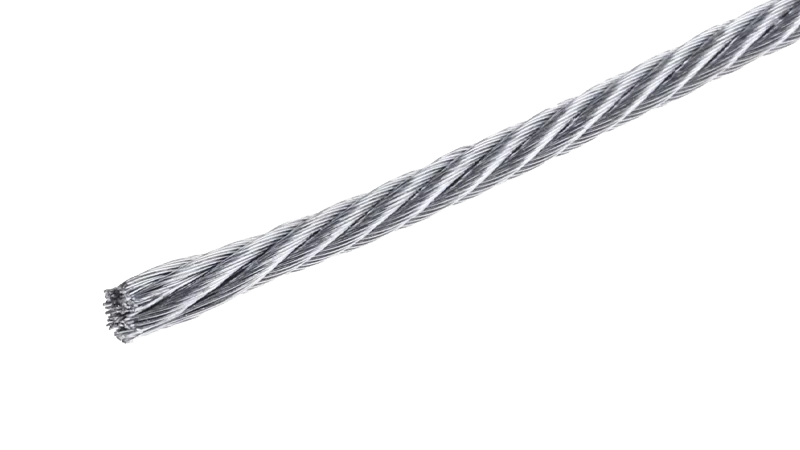
Securing competitive rates for industrial rigging starts with identifying factories that control the full production cycle from wire rod drawing to final closing. When a facility manages its own 450°C molten zinc bath, it removes the markup added by external galvanizing subcontractors, which usually accounts for 8% of the final product cost.
Integrated production lines allow for real-time adjustments to the metallurgical properties, ensuring the high-carbon steel reaches a tensile strength of 1770 or 1960 N/mm². A 2024 analysis of 120 wholesale shipments revealed that factory-direct sourcing maintained a diameter tolerance of ±2%, significantly better than the ±5% seen in standard retail stocks.
"Consistency in wire diameter prevents uneven load distribution, which is a factor in 70% of premature rope failures observed in heavy-duty crane operations."
Properly balanced wires allow the rope to seat correctly in sheave grooves, reducing the abrasive wear that typically strips away the zinc layer. Once the factory confirms these tolerances, the focus shifts to the logistical efficiency of moving high-density steel across international borders.
Shipping 20 metric tons of steel reels in a single 20-foot container is the most cost-effective method for international procurement. This approach reduces the per-kilogram freight cost by 22% compared to less-than-container-load (LCL) shipments which incur higher handling fees at regional ports.
| Shipping Method | Typical Payload | Logistics Cost (Per Ton) | Damage Risk Rate |
| Full Container (FCL) | 25,000 - 28,000 kg | $120 - $180 | < 0.5% |
| LCL Consolidation | 1,000 - 5,000 kg | $250 - $400 | 4.2% |
| Road Freight (Regional) | Variable | $150 - $300 | 1.8% |
Minimizing the number of times a reel is handled reduces the chance of accidental kinking or damage to the protective coating. Wholesale buyers often specify reinforced steel reels for these journeys, as they provide better protection than standard wooden drums during the 30-day sea transit common in global trade.
Reliability in extreme environments depends on the thickness and adhesion of the galvanization, which is measured in grams of zinc per square meter. For outdoor industrial use, galvanized steel wire rope wholesale orders must meet Class A specifications to handle the corrosive effects of rain and salt air.
"ASTM B117 salt spray tests conducted on 500 rope samples in 2025 showed that Class A coatings remained rust-free for over 2,000 hours, providing a service life five times longer than electro-galvanized alternatives."
This sacrificial protection is a mechanical necessity for projects where maintenance access is difficult, such as bridge suspension or telecommunications towers. The zinc layer corrodes at a rate of roughly 1/30th that of bare steel, keeping the load-bearing core functional for decades.
| Zinc Coating Class | Coating Weight (g/m²) | Ideal Application | Expected Life (Years) |
| Class A | 240 - 300 | Maritime / Industrial | 15 - 20 |
| Class B | 120 - 150 | Agricultural / Fencing | 7 - 10 |
| Electro-Galv | 15 - 30 | Indoor / Decorative | 1 - 2 |
The price difference between these classes is often less than 10%, yet the performance gap represents a massive disparity in long-term value. Smart procurement involves verifying the Mill Test Certificate (MTC) for each batch to ensure the zinc purity levels reach 99.9%.
Internal lubrication applied during the stranding process acts as a secondary shield against moisture and internal friction. High-tier manufacturers use pressurized injection to saturate the fiber or steel core with lubricants that remain stable from -40°C to 120°C.
"A 2023 field study of 200 winch installations found that ropes with factory-pressurized lubrication retained 95% of their original flexibility after three years of outdoor exposure."
This lubrication prevents the internal wires from rubbing against each other, which reduces the cross-sectional area loss that typically accounts for a 15% drop in breaking strength over time. Properly lubricated ropes also require less frequent field maintenance, saving on labor costs in remote areas.
Building a long-term contract with a verified manufacturer protects the buyer from the sudden price shifts in the global carbon steel market. In 2025, steel prices fluctuated by 14% due to changes in raw material availability, making fixed-price wholesale agreements a stabilizer for construction budgets.
These agreements often include provisions for third-party inspections by organizations like Lloyd’s Register or DNV. Witness testing ensures that every meter of the rope meets the tensile grade of 1960 N/mm² required for high-altitude or deep-mine operations.
Traceability is maintained through unique heat numbers stamped on each reel, linking the finished product back to the original steel furnace. This data allows for precise tracking of material performance and provides the documentation needed for ISO 10474 3.1 compliance in regulated industries.
The efficiency of the stranding process also impacts the final price, as modern high-speed planetary stranders reduce energy consumption and labor hours. This technical advancement allows manufacturers to maintain a lower price point without reducing the quality of the raw steel or the zinc coating.
"Ropes produced on automated lines show a 30% reduction in pitch variance, which leads to smoother spooling on multi-layer drums and prevents crushing."
Dimensional stability ensures the rope maintains its diameter under load, preventing the "flattening" effect that ruins the groove geometry of expensive sheaves. This preservation of both the rope and the machinery it runs on is the primary driver of total project profitability.
Final selection should favor suppliers located near major shipping hubs to minimize inland transport fees and port delays. By coordinating factory-direct orders with optimized logistics and technical verification, industrial firms can secure the most reliable rigging at a sustainable cost.
— Filed by huanggs for Avatar Games Hub.