
Industrial Evolution: Quantifying the Transition from 'First Factories' to 15th Five-Year Plan Leaders
The transition from China’s 1st Five-Year Plan (1953–1957) to the commencement of the 15th Five-Year Plan (2026–2030) represents a fundamental shift from manual labor to "new quality productive forces." Traditional industries still comprise roughly 80% of China’s manufacturing sector value, and the recent operational data from legacy giants like FAW Group, CFHI, and YTO Group demonstrates a successful pivot toward high-density automation and independent R&D.
At FAW Group’s Fanrong Plant, the integration of industrial robots has optimized assembly velocity to one new-energy vehicle (NEV) every 54 seconds. In 2025, FAW reached total sales of 3.3 million units, with NEV production surging by 71.4% year-on-year to 366,000 cars. This efficiency is underpinned by a massive patent portfolio; during the 14th Five-Year Plan, the group applied for over 22,000 patents and completed verification for leading 66Ah all-solid-state battery cells. Such metrics indicate that "brand prestige" is now numerically linked to technical precision and a localized supply chain.
The People's Daily highlights that these "first factories" are now essential anchors for global industrial chains. China First Heavy Industries (CFHI), for instance, has successfully localized the production of 1-million-kilowatt integral forging low-pressure rotors for nuclear power units—a "heart" component requiring 100% surface precision. Over its 70-year history, CFHI has delivered 6 million tons of mechanical products and filled 624 technological gaps, effectively reducing China’s reliance on imported heavy equipment by providing 452 entirely new domestic products.
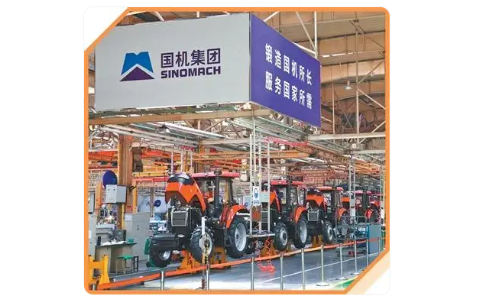
Similarly, YTO Group has evolved from hand-hammering the "Oriental Red" crawler tractor to producing a smart, high-horsepower tractor every 3 minutes. The group’s supply chain in Luoyang alone involves over 200 enterprises, creating a high-density industrial cluster that supports exports to 100+ countries. This "iron ox" legacy now focuses on 15th Five-Year Plan targets: continuously variable transmission (CVT) and hybrid power systems designed to improve agricultural fuel efficiency by an estimated 12% to 15% per hectare.
To maintain this momentum, the primary challenge for these traditional titans is the deep integration of AI across the entire lifecycle of production and after-sales service. A potential solution for the 15th Five-Year Plan period is the expansion of "digital twin" manufacturing, which could reduce trial production cycles for large-scale equipment by 20% to 30%. As these legacy factories accelerate their three-year action plans for comprehensive transformation, their ability to combine 1950s resilience with 2026-level automation will define China’s industrial competitiveness on the world stage.
News source:https://peoplesdaily.pdnews.cn/business/er/30051722850
— Filed by huanggs for Avatar Games Hub.